Latest Blogs
Stay updated with our latest blog posts.
For most residential pools in Southwest Florida, a good baseline is a weekly vacuum — but heavy use, high pollen, or storm debris can mean vacuuming two to three times a week to keep water clear and sanitizers working properly. This guide explains why a weekly schedule is a smart starting point for our climate, what factors should change that rhythm, and how to spot when your pool needs extra attention. You’ll learn how vacuuming limits algae, cuts chemical use, and protects equipment, plus practical schedules for local seasons and different pool types. We also cover DIY checks and when it’s time to call a pro. Finally, see how Seemore Services, LLC — serving Cape Coral and the surrounding Southwest Florida counties — can tailor a cleaning plan for your pool.
Vacuuming clears settled debris and organic matter from your pool’s floor and walls before it breaks down into nutrients that feed algae and cloud the water. The idea is simple: remove solids before they clog filters or decompose, so your sanitizer stays effective and pumps and filters don’t work overtime. Regular vacuuming also keeps the water looking inviting and cuts the odors that can come from organic buildup — especially useful during Southwest Florida’s heavy pollen seasons. Treat vacuuming as preventive upkeep, not just a reaction when the water looks off.
Vacuuming once a week delivers steady improvements in clarity, chemical balance, and equipment life — and that usually lowers long-term costs. Picking up leaves, pollen, and fine sediment reduces the organic load that uses up chlorine, so you need fewer shock treatments. It also prevents filters from clogging, helping pumps run more efficiently and extending filter media life. In a region with year-round outdoor exposure, a steady weekly habit helps stop the slow buildup that leads to algae and murky water.
Vacuuming breaks the algae lifecycle by removing spores and the organic material they grow on before colonies take hold. Less settled debris means fewer food sources for algae and more effective sanitizer levels. Vacuuming works best with brushing and filtration: brushing loosens biofilm, vacuuming removes it, and the filter traps the particles — together they keep the water clear. After storms or windy days common here, prompt vacuuming of floors and skimmer areas stops leftover debris from creating algae hotspots.

How often you vacuum depends on several interacting variables: how often the pool is used, the local environment and weather, pool type and size, and what cleaning gear you already have. Each factor changes how fast debris accumulates or how quickly sanitizer gets used, so the best schedule comes from weighing them together — not from a one-size-fits-all rule. Use simple diagnostics like skimmer load and filter run time to fine-tune intervals. The table below translates common conditions into practical vacuuming adjustments.
This table lists common factors, how they change vacuum needs, and a recommended adjustment.
Use this table to decide when to increase cleaning or stick with a weekly routine based on your yard and habits.
More swimmers mean more oils, sunscreen, hair, and dirt — and those contaminants settle out and need removal sooner. Heavy family use or frequent parties often push vacuuming to two or three times weekly to avoid visible buildup and keep chemistry balanced. A rarely used pool can often stay on a weekly or bi-weekly schedule, but watch filter pressure and skimmer baskets: how fast they fill tells you when to step up cleaning.
Your yard and the local weather control how much organic material gets into the pool. Properties with lots of trees, lawns, or exposure to steady winds pick up debris faster. In Southwest Florida, pollen spikes and storms can drop fine particles and leaves into corners that become algae hotspots if left alone. After windy or stormy weather, vacuuming quickly removes material before it decomposes. Adjust your routine seasonally — more frequent cleaning during pollen season and after tropical weather cuts down on long-term problems.
Pool type and size affect how long vacuuming takes and what areas need attention. Large in-ground pools take more time but don’t always need proportionally more cleanings if circulation is good. Above-ground pools or small plunge pools near trees often need more frequent spot-cleaning. Surface material matters too — plaster, pebble, and vinyl need different handling to avoid damage. Knowing your pool’s construction and exposure helps you plan realistic cleaning sessions and decide when a pro should handle larger or sensitive jobs.
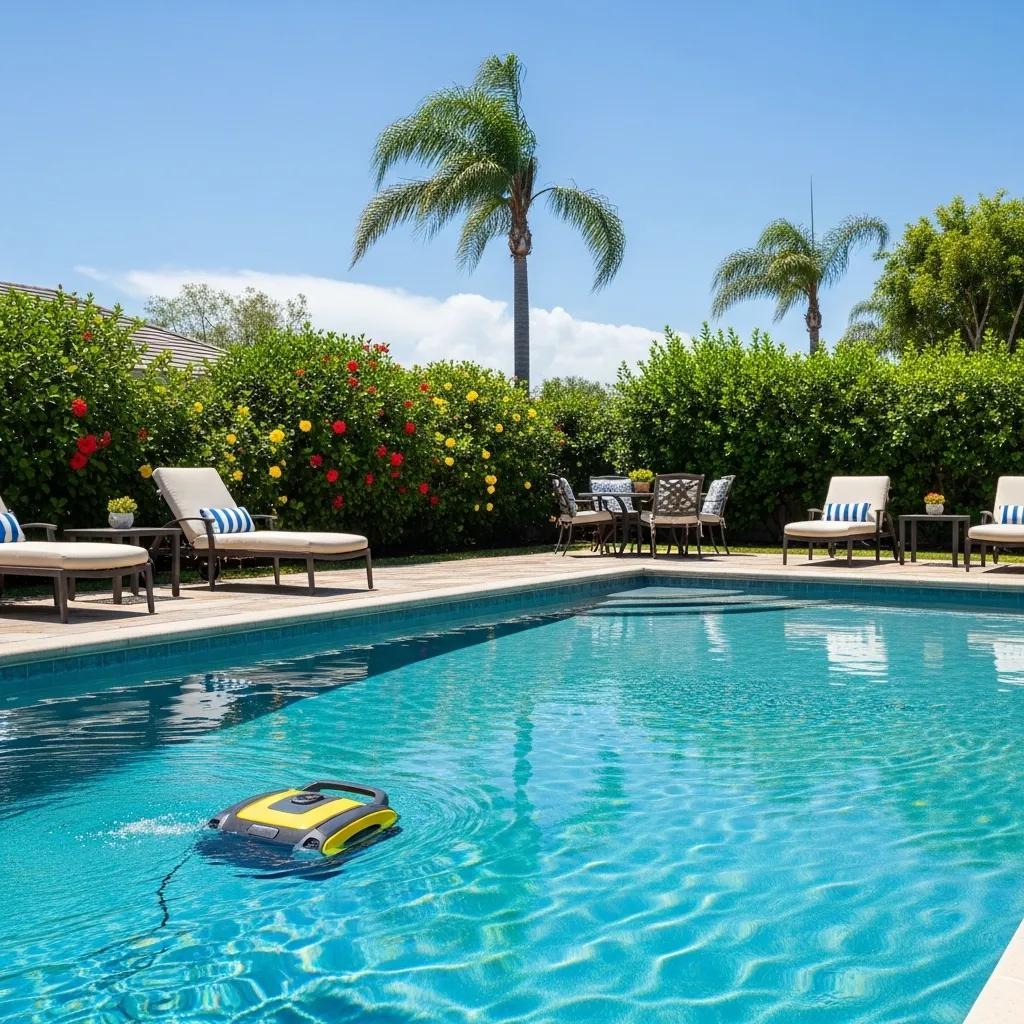
Robotic cleaners keep floors and some walls tidy and reduce manual work, but they can miss corners and fine sediment or struggle after heavy leaf fall. Robots are great for steady baseline maintenance, but they complement — not always replace — manual vacuuming for spot work and post-storm recovery. Use a robot regularly and add manual vacuuming when debris is heavy or when you need a deep clean.
For most Southwest Florida homes, a weekly vacuuming rhythm keeps water clear and equipment healthy, with extra sessions when debris or usage spikes. Given our pollen seasons, frequent storms, and year-round swimming, weekly cleaning balances time and chemical stability for typical residential pools. Supplement weekly vacuuming with targeted post-storm or post-event cleanups to stop organic matter from taking hold and to keep filtration working efficiently. The quick-reference table below helps match local situations to recommended frequencies.
Quick reference that matches common conditions to suggested vacuuming cadences.
This table gives a starting cadence you can tune by watching your pool — for many local pools, weekly is the sensible baseline.
Weekly vacuuming keeps the organic load low so chlorine stays effective and your water looks clear without overworking you or your chemicals. In Southwest Florida’s climate, a weekly pass usually catches most settled debris before it decomposes into dissolved organics. That lowers the need for shock treatments and heavy filter work, saving money and extending equipment life. Pair weekly vacuuming with regular skimming and filter attention to avoid most water-quality emergencies.
Bump up frequency after specific triggers: big pool parties, windstorms that drop leaves, sustained pollen peaks, or when you see early algae spots. Those conditions speed up contaminant buildup and drain sanitizer faster, so extra vacuuming helps avoid full algae blooms or filter overload. For tree-lined yards, a 2–3× per week pulse during peak seasons often prevents more intensive cleanups later. Watch visual cues and filter pressure to know when to temporarily increase work.
If your pool is covered, rarely used, or the property is empty for a while, shift from frequent vacuuming to monitoring and periodic maintenance. Bi-weekly or monthly checks of skimmers and filter pressure plus a short vacuum session usually prevent surprises when you return to regular use. If you travel often, schedule maintenance visits to keep chemistry and circulation in check. If you have smart pool equipment, use alerts — but arrange occasional professional checks for extended absences.
Certain signals — cloudy water, visible algae, lots of debris in skimmers or on the floor, and rising filter run times — show your current vacuum schedule isn’t enough. These signs point to solids or organics that bypass filters or overwhelm sanitizer capacity, so act faster to avoid algae outbreaks or equipment strain. The checklist below helps you spot when to increase vacuuming.
The following list highlights common signs that mean you should vacuum more often.
Cloudiness usually comes from fine particles that stay in suspension and strain your filter, so more aggressive removal is needed. If the pool stays cloudy after normal filtration cycles, vacuuming plus filter maintenance will remove particles that chemistry alone won’t fix. Quick checks: see how fast the water clears after a run cycle and watch filter pressure — both tell you if extra vacuuming or backwashing is required. Acting quickly with skimming, vacuuming, and filter maintenance restores clarity faster than repeated chemical dosing.
Small algae patches or a surface film are early signs to brush and vacuum more often; widespread green water calls for stronger remediation with chemicals and likely professional help. Localized algae can often be handled with brushing, targeted vacuuming to waste, and sanitizer adjustments; full blooms usually need shock treatment and deeper cleaning. If skimmers fill constantly, you have a continuous influx that will overwhelm the system — increasing vacuum frequency and addressing debris sources (like trimming trees or using covers) reduces repeat problems. Quick physical removal saves time and chemicals in the long run.
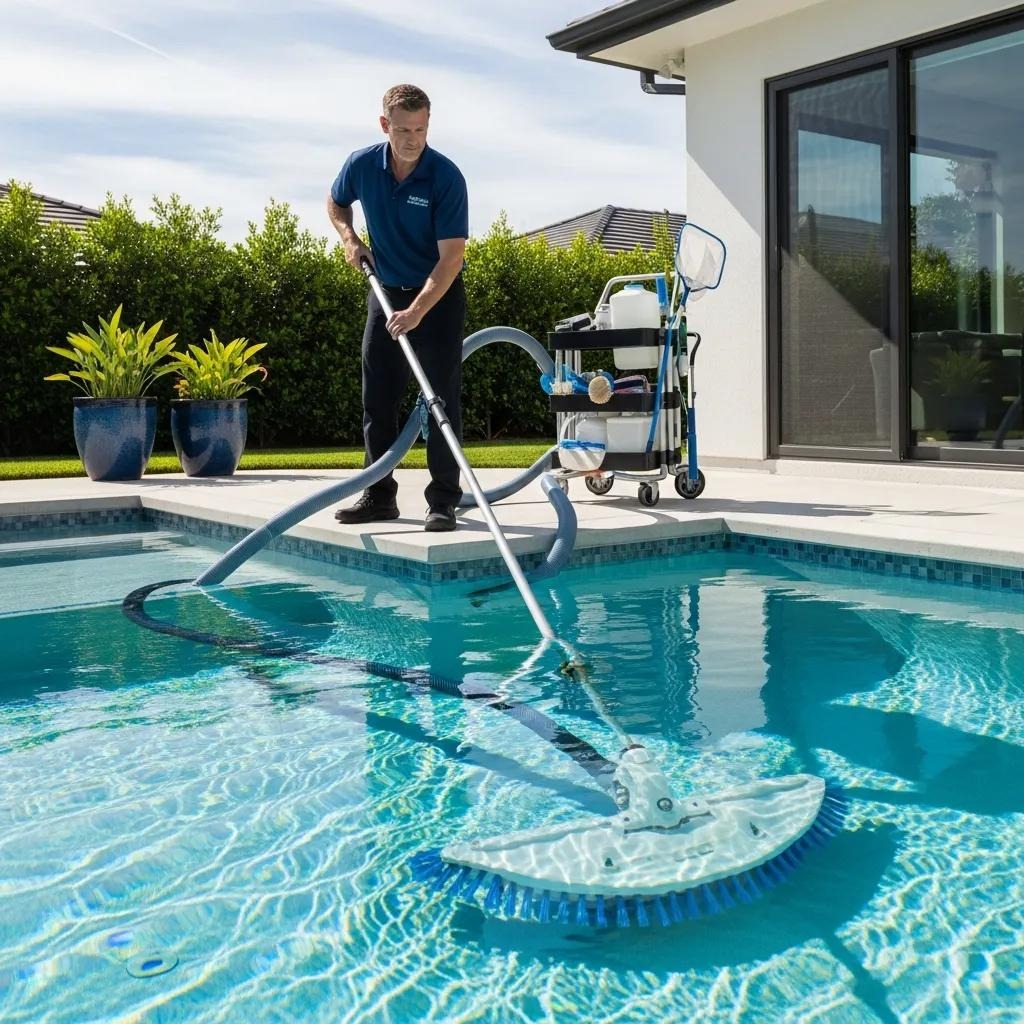
Call a pro when debris is heavy after storms, algae is widespread, equipment problems make cleaning difficult, or you simply don’t have the time or tools. Professionals diagnose root causes, use specialized equipment, and perform deeper cleanings — like vacuum-to-waste and thorough filter service — that go beyond routine homeowner work. If you want a predictable routine, pros offer recurring maintenance that keeps your pool swim-ready without you managing every step. The comparison table below shows common DIY limits and what professionals bring to the job.
Professionals deliver targeted diagnostics and corrective work that prevents recurring issues and protects your pool system.
Follow a reliable sequence: skim loose debris first, brush walls and corners to loosen material, vacuum slowly to avoid stirring sediment, and clean or backwash filters after heavy jobs to restore flow. Use the right vacuum head and hose length to avoid snapped fittings, check for suction leaks, and work in overlapping passes for full coverage. For fine pollen or sediments, vacuum slowly and consider vacuum-to-waste if the filter can’t capture the load. After vacuuming, recheck chemical levels — removing organics often lowers chlorine demand and can shift pH.
These habits cut down on repeat work and protect pumps and filters; with practice, vacuuming becomes faster and more effective.
Seemore Services, LLC knows Southwest Florida pools — including Cape Coral — and the seasonal challenges they face. We offer full-service pool care: maintenance, cleaning, heating, repairs, and reliable vacuuming. Our local experience helps us anticipate pollen spikes and storm debris, then apply the right cadence and techniques to prevent recurring problems. Whether you’re a homeowner or property manager, we’ll design and carry out a maintenance plan tuned to your pool’s exposure and usage, keeping your water clear and equipment in good shape.
Booking professional vacuuming is simple: share basic pool details, describe recent issues, confirm an access window, and choose a maintenance cadence that fits your schedule. Preparing the pool area — clearing obstructions, securing pets, and noting equipment concerns — helps our techs work efficiently. Seemore Services follows a customer-focused process: assess the pool, recommend a plan, perform the cleaning, and leave clear follow-up advice. The steps below make scheduling straightforward and set expectations up front.
The numbered list below shows the simple steps homeowners should follow to schedule a professional pool cleaning visit.
Start by sharing your pool’s details and recent symptoms so we can send the right crew and equipment. Confirm an appointment window and any on-site instructions for access and pets, and ask what, if anything, we need you to clear beforehand. On the visit, technicians inspect the pool, perform vacuuming and related tasks, and advise on next steps or frequency adjustments. After service, request a short report on what we did and our recommendations to keep the pool in top condition.
Seemore Services relies on trained technicians and a full suite of pool maintenance offerings — maintenance, cleaning, heating, and repairs — so we can solve both routine vacuuming needs and the issues that cause repeats. Our local knowledge of Southwest Florida helps us tailor plans around pollen seasons, storm patterns, and yard exposure. We communicate clearly about recommended frequencies and what to expect during visits, then follow up with guidance so you can keep the pool balanced between appointments. That regional experience plus comprehensive service helps homeowners keep water clear and equipment running smoothly without managing every detail themselves.
Regular vacuuming keeps your pool clean, clear, and easier on chemicals and equipment. By understanding the factors that affect vacuuming frequency, you can tailor a schedule that fits your pool and lifestyle. If you’d rather leave it to the pros, Seemore Services, LLC offers local, experienced pool vacuuming and full-service care tuned to Southwest Florida conditions. Ready to protect your pool and save time? Explore our cleaning services and let us build the right plan for your property.